



Small Business Saturday Customer Retention: How to Turn Holiday Shoppers Into Repeat Customers
A Small Business Saturday customer retention is the work of turning first-time holiday shoppers into repeat customers after the event ends. This year, Small Business Saturday falls on November 28, 2026, according to the U.S. Small Business Administration, which gives you a little over two weeks to prepare.
A shopper discovers your boutique while buying a gift. A first-time guest stops into your café between errands. A new client books a salon appointment before a family gathering. Each visit is a chance to make a good impression and give that customer a reason to come back. With some planning, you can turn those holiday introductions into relationships that carry into January and beyond.
TL;DR: How Do You Turn Holiday Shoppers Into Repeat Customers?
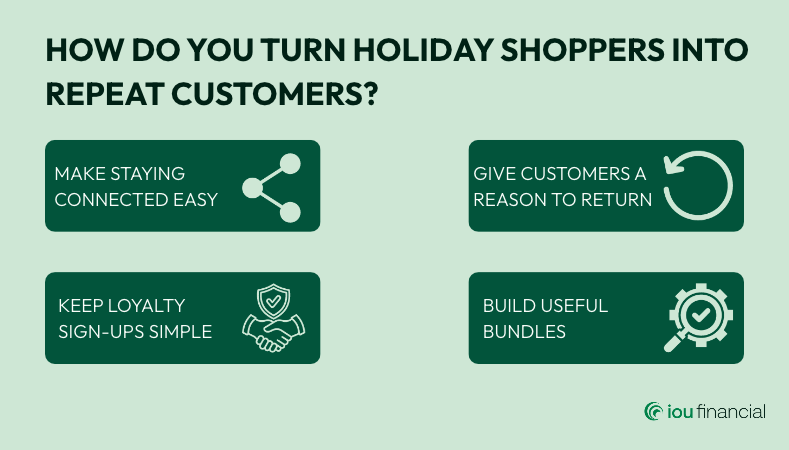
To turn holiday shoppers into repeat customers, give them an easy way to stay in touch, a specific reason to return, a bundle that creates a natural next purchase, and a simple loyalty sign-up. Then track repeat purchases to see what worked.
The four steps:
- Make staying connected easy. Offer clear, optional email and SMS sign-ups at checkout.
- Give customers a reason to return. Create a January offer with straightforward terms and an incentive your margins can support.
- Build useful bundles. Pair complementary products or services with a natural reason to purchase again.
- Keep loyalty sign-ups simple. Train employees to explain the benefit in one or two sentences and make joining easy.
Step 1: How Do You Get Holiday Customers to Sign Up for Email and SMS?
Make the sign-up quick, optional, and specific about what the customer gets. Use a checkout screen, a tablet, or a QR code that opens a short form. For online shoppers, add a clear invitation at checkout or on the order confirmation page.
Give customers a concrete reason to join, such as:
- Early access to new arrivals.
- Invitations to customer events.
- Product care tips and restock updates.
- Occasional offers for a future visit.
“Sign up for updates” doesn’t tell shoppers much. “Get first access to new collections and invitations to our in-store events” makes the benefit clear.
Ask Only for What You Need
Keep the form short. An email subscription usually doesn’t need a customer’s mailing address, birthday, and phone number.
Keep email and text marketing choices separate. An email address provided for a receipt, or a phone number provided for an order update, should not be treated as a marketing sign-up.
For SMS, use a dedicated consent process with appropriate disclosures and records, and confirm that your setup meets applicable requirements before sending promotional texts.
Marketing emails should include accurate sender information, a valid postal address, and a clear way to unsubscribe. The FTC’s CAN-SPAM compliance guide explains these requirements.
Prepare a Welcome Message Before the Rush
Plan your first follow-up before the holiday weekend begins. A specialty shop, for example, could send new subscribers a welcome email within a few days that includes:
- A thank-you for supporting the business.
- One useful tip related to the products it sells.
- A clear explanation of what subscribers can expect next.
Keep it focused. A helpful introduction gives customers a reason to recognize, and open, your next email.
Step 2: What Is a January Bounce-Back Offer?
A bounce-back offer gives customers an incentive during one visit that they can redeem on a later visit. It creates a clear next step after the first purchase.
For example, a retailer might offer:
Make a qualifying purchase this weekend and receive $10 off a purchase of $50 or more from January 4–31, 2027.
This is a hypothetical example. Your offer should reflect your product costs, margins, and customers’ buying habits.
Other options include:
- A complimentary sample with a qualifying January purchase.
- A modest add-on with a future salon appointment.
- An invitation to a January customer shopping event.
- A reward toward a later café visit.
Choose a benefit that connects to why customers visited your business in the first place.
How Do You Check the Cost of a Retention Offer?
Subtract the discount and your product cost from the selling price, then compare what’s left to your other expenses. A promotion should encourage repeat business without leaving too little money to cover the cost of running your business.
Here is a hypothetical example:
| Line | Amount |
| Eligible purchase | $50 |
| Coupon | –$10 |
| Product cost | –$25 |
| Left after discount and product cost | $15 |
That $15 still has to cover processing fees, labor, rent, and other expenses. Use your actual numbers to decide whether an incentive makes sense. Also consider whether the offer encourages an additional visit or simply discounts a purchase the customer already planned to make.
Make the terms easy to find, including:
- Redemption dates.
- Minimum purchase requirements.
- Product or service exclusions.
- Whether the offer can be combined with other promotions.
Keep promotional coupons distinct from purchased gift cards. Different rules can apply, so review applicable requirements before setting expiration dates or restrictions.
Connect Follow-Up to the Purchase
For customers who have opted into marketing, a purchase can make your follow-up more relevant. A coffee buyer might appreciate brewing tips followed by a replenishment reminder. A salon client may find product-use advice and a rebooking link helpful.
Remember that holiday purchases are often gifts, so avoid assuming every item reflects the buyer’s own interests. When appropriate, let subscribers choose the types of updates they want to receive.
A promotion should encourage repeat business without leaving too little money to cover the cost of running your business. To learn more, check out these tips on how to protect your profit margins during a small business promotion.
Step 4: How Do You Make Loyalty Program Sign-Ups Simple?
Make sure every employee can explain the benefit in one or two sentences, and make joining take less than a minute. A loyalty program is easier to join when customers quickly understand what they get.
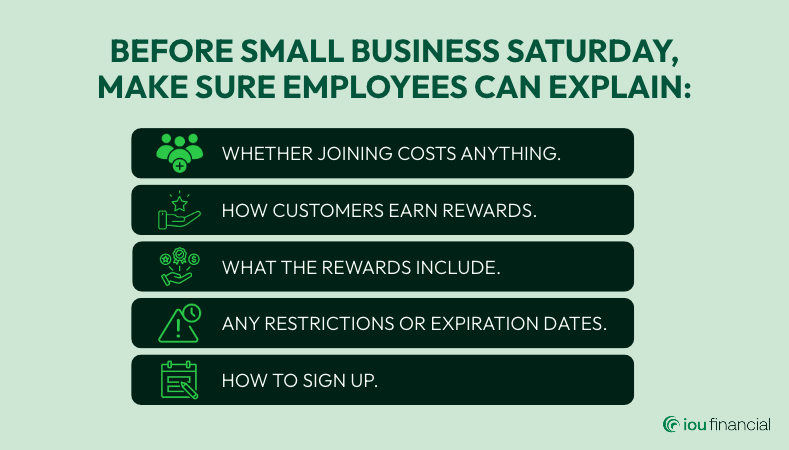
Before Small Business Saturday, make sure employees can explain:
- Whether joining costs anything.
- How customers earn rewards.
- What the rewards include.
- Any restrictions or expiration dates.
- How to sign up.
Give your team a brief, accurate script to use at checkout. For a café with a qualifying program, that might be:
“Our free rewards program gives you a drink after ten qualifying purchases. Would you like to join?”
Explain the actual benefit, invite the customer once, and make it easy to decline.
Test the Sign-Up Process Before the Rush
Walk through the sign-up experience on the devices customers will use. Check that QR codes open the correct page, forms work on mobile, and employees know what to do when someone is already a member.
Keep loyalty enrollment and marketing consent separate. Joining a rewards program should not be treated as automatic permission for every type of promotional message.
If you don’t have a formal loyalty platform, start with a straightforward reward your team can manage consistently. The customer experience matters just as much as the reward. Helpful service, accurate orders, and clear return policies give people reasons to trust your business and visit again.
How Do You Measure Customer Retention After Small Business Saturday?
Track the repeat-purchase rate of your holiday customers, the redemption rate of your return offer, and average order value, using the same measurement window each time. Holiday sales show what happened during the event. Repeat purchases show whether those visits turned into ongoing relationships.
| Measure | How to Calculate It | What It Shows |
| Holiday customer repeat-purchase rate | First-time customers from a defined holiday period who purchase again by a chosen date ÷ all first-time customers in that group × 100 | Whether new holiday customers return |
| Bounce-back redemption rate | Offers redeemed ÷ offers issued × 100 | Whether customers use the incentive |
| Average order value | Sales after discounts and refunds ÷ completed orders, using a consistent reporting method | How much customers spend per order |
For example, if you identify 100 first-time customers on Small Business Saturday and 18 purchase again by March 31, 2027, that group’s repeat-purchase rate is 18%. This is a hypothetical calculation, not an industry benchmark.
Use consistent measurement windows when comparing campaigns, and review discounts, product costs, and staff time alongside revenue to understand whether the promotion was worthwhile. If your system can’t reliably identify individual customers, track offer redemptions as a narrower measure instead of claiming an exact retention rate.
Your Small Business Saturday Customer Retention Checklist
This week:
- Choose a clear reason for customers to subscribe.
- Test email and SMS sign-up forms and QR codes on a phone.
- Set the terms and budget for one return-visit offer.
Before November 28, 2026:
- Create a useful product or service bundle.
- Give employees a short loyalty program explanation.
- Prepare a welcome message for new subscribers.
- Decide how you’ll track repeat visits through the first quarter of 2027.
You don’t need to launch every idea at once. Start with a process your team can deliver consistently, then use the results to improve your next campaign.
Frequently Asked Questions About Small Business Saturday Customer Retention
When is Small Business Saturday in 2026?
Small Business Saturday is November 28, 2026, the Saturday after Thanksgiving in the United States.
What is customer retention?
Customer retention means keeping existing customers engaged so they continue buying from your business over time. For holiday shoppers, it starts with a positive first experience and a relevant reason to return.
How can small businesses turn holiday shoppers into repeat customers?
Collect optional email and SMS sign-ups at checkout, offer a clear reason to return in January, create bundles that lead to a natural next purchase, and make loyalty sign-ups simple. Then track repeat purchases to see what worked.
How can small businesses encourage repeat visits without discounts?
Offer useful product advice, convenient reordering, early access to new arrivals, customer events, or easy appointment booking. Choose benefits that fit your customers’ needs and that your team can deliver consistently.
What is a January bounce-back offer?
A January bounce-back offer gives holiday customers an incentive to return during January. It might include a coupon, a qualifying purchase reward, or a service add-on with clear redemption terms.
How do you measure customer retention for a holiday promotion?
Divide the number of first-time holiday customers who purchase again by a chosen date by the total number of first-time customers in that group, then multiply by 100. Also track offer redemption rate and average order value.
Does a higher average order value mean better customer retention?
No. Average order value measures spending per order. Customer retention concerns whether customers continue buying over time. Track repeat purchases separately to understand whether holiday shoppers are returning.
Give the Next Visit as Much Attention as the First
Small Business Saturday can introduce people to your business. What happens afterward helps determine whether they return. A useful follow-up, a relevant offer, and a consistently good experience can give customers reasons to choose you again, well beyond the holiday season.
At IOU Financial, we know small business owners are planning for more than one busy weekend. Explore our small business resources for practical ideas to help you manage cash flow, prepare for seasonal changes, and support your next stage of growth.
This article provides general educational information, not legal, tax, or financial advice. Review applicable requirements before launching marketing messages, gift card promotions, or loyalty offers.