



Planning for Q4: When Working Capital for Small Businesses Makes Sense and When It Doesn’t
TL;DR
Q4 working capital for small businesses isn’t just about deciding whether to get a loan, it’s about deciding whether borrowing is the right tool for what’s ahead. Map your Q4 cash flow, know exactly what the funds will support, and test whether repayment still works under a conservative scenario. Sometimes the answer is borrow. Sometimes it’s wait, scale back, or fix the underlying issue instead. This guide walks through both.
The final months of the year can bring new opportunities and new expenses for small businesses.
Retailers may need to order inventory before holiday demand arrives. Contractors may need materials and labor for upcoming projects. Restaurants may be preparing for seasonal traffic, while other businesses may be investing in marketing, equipment, or additional staff.
Working capital for small businesses can help a business prepare for these needs, but financing is not automatically the right answer. Before borrowing, it is important to understand what the funds will be used for, when the investment may begin producing results, and how repayment will affect cash flow.
As you plan for Q4, here are a few ways to decide whether working capital for small businesses could support your business or whether waiting may be the smarter move.
1. Start With a Clear View of Your Q4 Cash Flow
Before looking for financing, look at what you expect to come in and go out of your business through the end of the year.
Review your projected:
- Sales and customer payments
- Payroll and staffing costs
- Inventory and supply purchases
- Rent, utilities, taxes, and other operating expenses
- Equipment, repairs, or planned improvements
- Marketing and promotional spending
- Existing debt payments
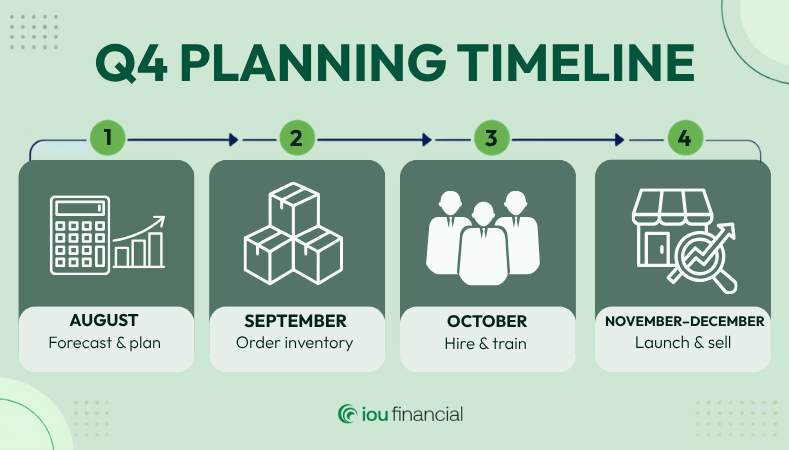
Pay close attention to timing. A business can have strong sales on paper and still experience a cash flow gap if expenses are due before customers pay. For example, you may need to purchase inventory in September even though most of the related sales will not happen until November or December.
A realistic cash flow projection can help you identify whether you have a short-term timing gap, a larger financial challenge, or enough cash to move forward without borrowing. The goal is not to predict every dollar perfectly. It is to make the decision using reasonable numbers instead of assumptions.
2. Know Exactly What the Working Capital Will Support
Working capital for small businesses is most useful when it has a specific job.
Financing may make sense when it helps your business prepare for a realistic, time-sensitive opportunity, such as:
- Purchasing inventory based on expected seasonal demand
- Hiring or scheduling staff to support confirmed or historically reliable business
- Buying materials needed to begin an upcoming project
- Repairing essential equipment that keeps revenue-producing work on schedule
- Funding a marketing campaign when you understand the likely cost of acquiring customers
- Bridging the timing gap between completing work and receiving customer payments
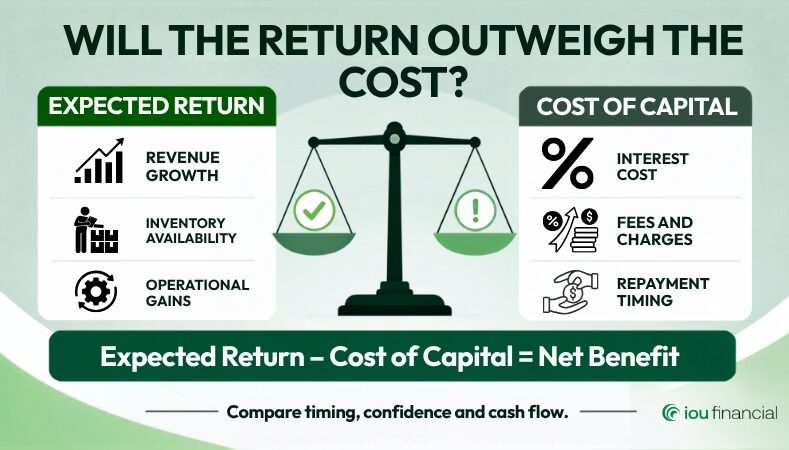
The clearer the purpose, the easier it is to determine how much funding you actually need and whether the potential benefit justifies the cost.
“Extra cash” is not a borrowing plan. “Purchasing $30,000 of inventory that we expect to sell during our strongest quarter” is a plan you can evaluate.
3. Consider How Quickly the Investment May Produce Results
Financing creates an obligation before it creates a result.
If you borrow to purchase inventory, hire employees, or launch a marketing campaign, repayment may begin before the new revenue arrives. That does not necessarily make financing a poor choice, but the timing needs to fit your business.
Ask yourself:
- When will the funds be put to use?
- When could the investment begin generating revenue or improving operations?
- How confident am I in the expected demand?
- What happens if sales arrive later than planned?
- Can the business make the payments without relying on a best-case outcome?
Historical results can be more useful than optimism. If your business has several years of Q4 sales data, confirmed orders, signed contracts, or a marketing channel with a reliable track record, you may have a stronger basis for your decision. If the opportunity is completely untested, consider whether a smaller commitment would reduce the risk.
4. Make Sure the Repayment Fits Your Normal Cash Flow
It is not enough to know that your business can make a payment during a strong week or month. The repayment schedule should also be manageable when sales are slower or an unexpected expense appears.
Before accepting financing, review:
- The amount your business will receive
- The total amount you will repay
- Interest and any applicable fees
- How often payments will be made
- When the first payment is due
- Whether payments could affect payroll, vendor obligations, or your cash reserve
- What happens if you repay early or miss a payment
Build the payment into your cash flow projection. Then test a more conservative scenario. If sales are lower or customer payments arrive later than expected, can your business still meet its obligations?
If the payment only works when everything goes according to plan, the financing may create more pressure than flexibility.
5. Recognize When Borrowing May Not Be the Right Move
Sometimes the responsible decision is to wait, reduce the expense, or choose another approach.
Working capital may not be the right fit if:
- You do not have a specific use for the funds
- The expense can be delayed without hurting the business
- The business is regularly losing money and financing would only postpone a larger problem
- Repayment would leave too little room for ordinary operating expenses
- The decision depends entirely on an untested sales forecast
- You are borrowing more than the opportunity requires
- You have not reviewed the full cost and repayment terms
Financing can help bridge a temporary cash flow gap or support a well-defined opportunity. It is less likely to solve an ongoing problem with pricing, expenses, collections, or profitability unless the underlying issue is also addressed.
In some cases, a smaller inventory order, phased equipment purchase, adjusted marketing plan, or conversation with vendors about payment timing may be enough. Borrowing is one business tool, not the only one.
6. Plan Before the Need Becomes Urgent
The best time to evaluate working capital is before your business is under pressure.
Planning early gives you time to review financial statements, update cash flow projections, determine the amount you need, understand available options, and ask questions before making a commitment. It also helps you avoid borrowing based solely on speed when a deadline is approaching.
If you decide to explore financing, compare the full terms and choose an option that fits the way cash moves through your business. If the numbers suggest that waiting is better, that can be a smart outcome too.
Make the Decision That Supports Your Business
Working capital can help a small business prepare for seasonal demand, manage a timing gap, or act on a clear growth opportunity. But the decision should begin with your numbers, not with the availability of financing.
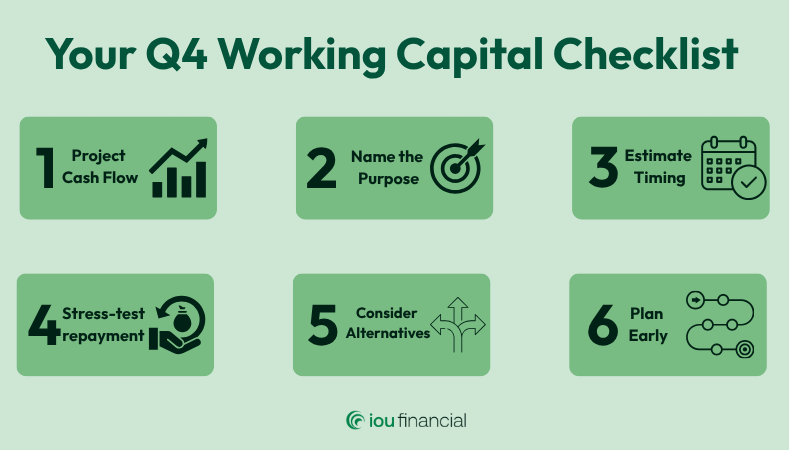
Review what Q4 may require, identify the purpose of the funds, estimate when results may arrive, and make sure repayment fits your cash flow under more than one scenario. The right decision may be to borrow now, borrow less, wait, or not borrow at all.
If financing fits your plan, IOU Financial can help you explore straightforward funding options designed around the needs of your business. You can review your options with no obligation to accept an offer.
FAQ: Q4 Working Capital for Small Businesses Planning
How far in advance should I start Q4 working capital planning?
Ideally, 60-90 days ahead, which puts the starting point right around August or early September for most seasonal businesses.
Is it ever better to wait than to borrow?
Yes. If the expected return is unclear, margins are already tight, or the underlying issue is a recurring cash flow gap rather than a one-time seasonal need, it’s often smarter to wait or scale back than to add a payment on top of the pressure.
What’s the biggest planning mistake small business owners make?
Focusing only on the expense side. The bigger risk is usually the timing gap between when money goes out and when revenue comes back in that gap is what actually creates the need for working capital.
Does financing always need to cover 100% of a Q4 expense?
No. Financing part of an expense while covering the rest from cash on hand is a common and reasonable approach, especially when it keeps the payment size manageable.