



What Is a Personal Guarantee on a Business Loan? What to Know Before You Sign
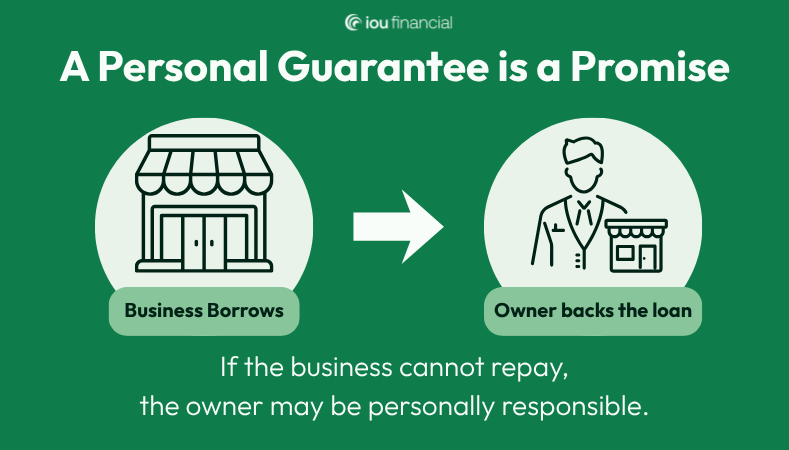
A personal guarantee on a business loan is a promise. When you sign one, you are telling a lender: “If my business cannot repay this loan, I may be personally responsible for paying it.”
That is the basic concept. But the details—how much you could owe, what triggers the guarantee, and when it ends—can make a significant difference. Here is what small business owners should understand before signing.
Why Lenders Ask for a Personal Guarantee on a Business Loan
Many business owners form an LLC or corporation partly to separate their personal finances from the company’s obligations. That separation can provide important protection, but it is not absolute.
A personal guarantee creates a separate contractual obligation connected to a particular business debt. If the business cannot repay, the lender may be able to seek repayment from you personally, not only from the business, depending on the financing agreement and applicable law.
Signing a guarantee does not eliminate every protection provided by your business structure. It does mean that you have voluntarily accepted personal responsibility for the obligations described in that agreement.
Why Lenders Ask for a Personal Guarantee on a Business Loan
Small businesses may not have the long credit history, substantial assets, or financial resources of larger companies. A personal guarantee gives the lender an additional potential source of repayment if the business cannot meet its obligation.
This is common across small business lending, but requirements vary by lender and financing product. For example, U.S. Small Business Administration guidance requires individuals who own 20% or more of a small business applicant to provide an unlimited personal guaranty for its 7(a) and 504 loan programs.
At IOU Financial, personal guarantees are required on every loan. IOU uses an unlimited personal guarantee, meaning the guarantor may be responsible for the full amount covered by the agreement if the business cannot repay.
The exact obligations are defined in the loan documents, which is why it is important to understand what could happen before you sign.
What Could Happen If the Business Cannot Repay?
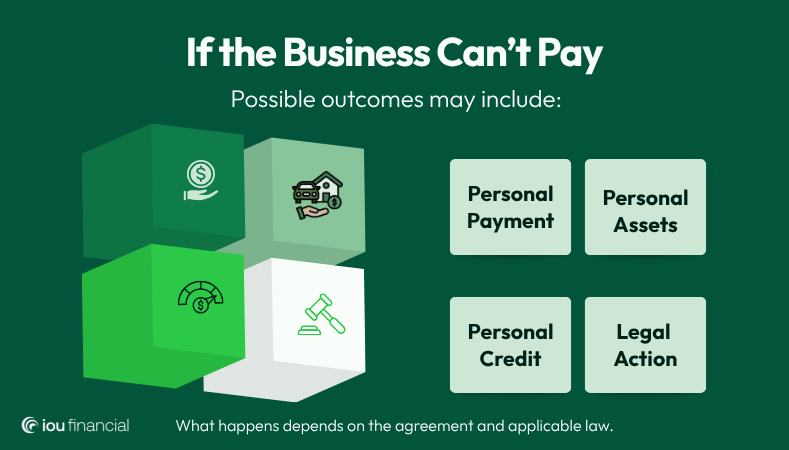
If your business defaults and you signed a personal guarantee, the lender may be able to:
- Ask you to pay the debt personally. You could become responsible for the amount covered by the guarantee.
- Pursue certain personal assets. Depending on the agreement and state law, personal funds or property could be affected. Your home is not automatically at risk.
- Affect your personal credit. A default, collection account, or judgment could affect your personal credit, depending on how it is reported.
- Take legal action. If the lender wins a judgment, state law may allow wages or funds in a bank account to be subject to collection.
If you are married, your spouse is not automatically responsible when they have not signed the guarantee. However, jointly owned or community property may be affected in some states. Consider asking an attorney how your state’s rules apply before you sign.
These outcomes depend on the agreement and applicable law. If your business is struggling, contact the lender early, before a missed payment limits the options available.
What to Review Before You Sign
Some financing products use standard guarantee terms that cannot be changed. Even when a personal guarantee on a business loan is required, you should understand exactly what it covers before signing.
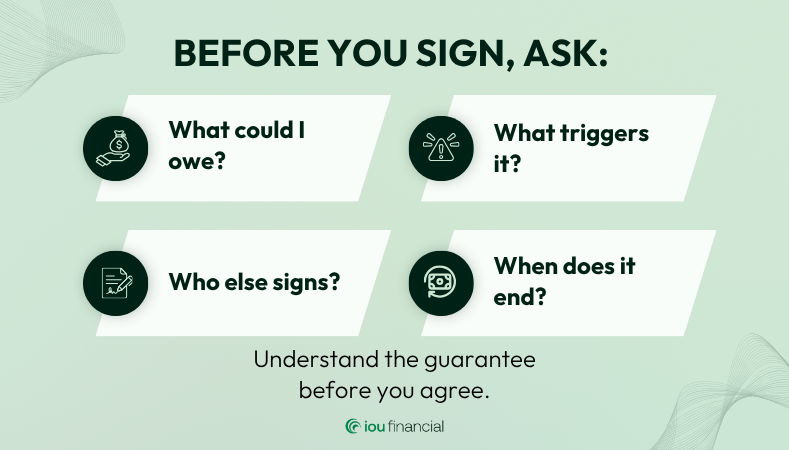
Ask:
- What amount and additional costs could I be responsible for?
- What circumstances would trigger the guarantee?
- Who else is required to sign?
- Does the guarantee continue after a renewal or modification?
- When will I receive confirmation that the guarantee has ended?
If the explanation you receive does not match the written agreement, or anything remains unclear, pause and request clarification. For a significant obligation, consider having a qualified attorney review the documents.
Six Questions to Ask Before You Sign
Before accepting a personal guarantee on a business loan, ask:
- Who is required to guarantee the loan? Confirm whether the requirement applies to every owner or only certain individuals.
- Is the guarantee unlimited or limited? If it is limited, ask how the limit is calculated and what expenses it covers.
- What obligations are included? Determine whether the guarantee covers principal only or also interest, fees, renewals, extensions, modifications, and collection costs.
- What counts as a default? Default may involve more than missing a payment, so review the complete definition.
- Can the lender seek payment from the guarantor before exhausting other options? Do not assume the lender must pursue the business or its collateral first.
- When does the guarantee end? Find out whether it ends when the original loan is repaid or continues through a renewal, refinance, modification, or future financing.
Ask for answers in writing. If the explanation you receive does not seem to match the contract, pause and request clarification. For a significant or complicated obligation, consider asking a qualified attorney to review the documents.
The Bottom Line
A personal guarantee on a business loan is not automatically a bad thing. Many business owners sign one to access financing that supports inventory purchases, equipment, expansion, payroll, or other business needs.
The important part is understanding the commitment. Know who is responsible, how much the guarantee covers, what could trigger it, and when it ends. Review it alongside the total repayment amount, fees, term, payment schedule, and other provisions when comparing business financing offers.
The best time to ask questions and understand the available terms is before you sign—not after the business runs into difficulty.
Considering financing for your business? Visit IOUFinancial.com to explore your options and learn what to expect before you apply.
This article is for general informational purposes only and does not constitute legal, tax, or financial advice. Financing terms and enforcement rights vary by agreement and applicable law. Consult a qualified attorney or financial advisor regarding your specific circumstances.